
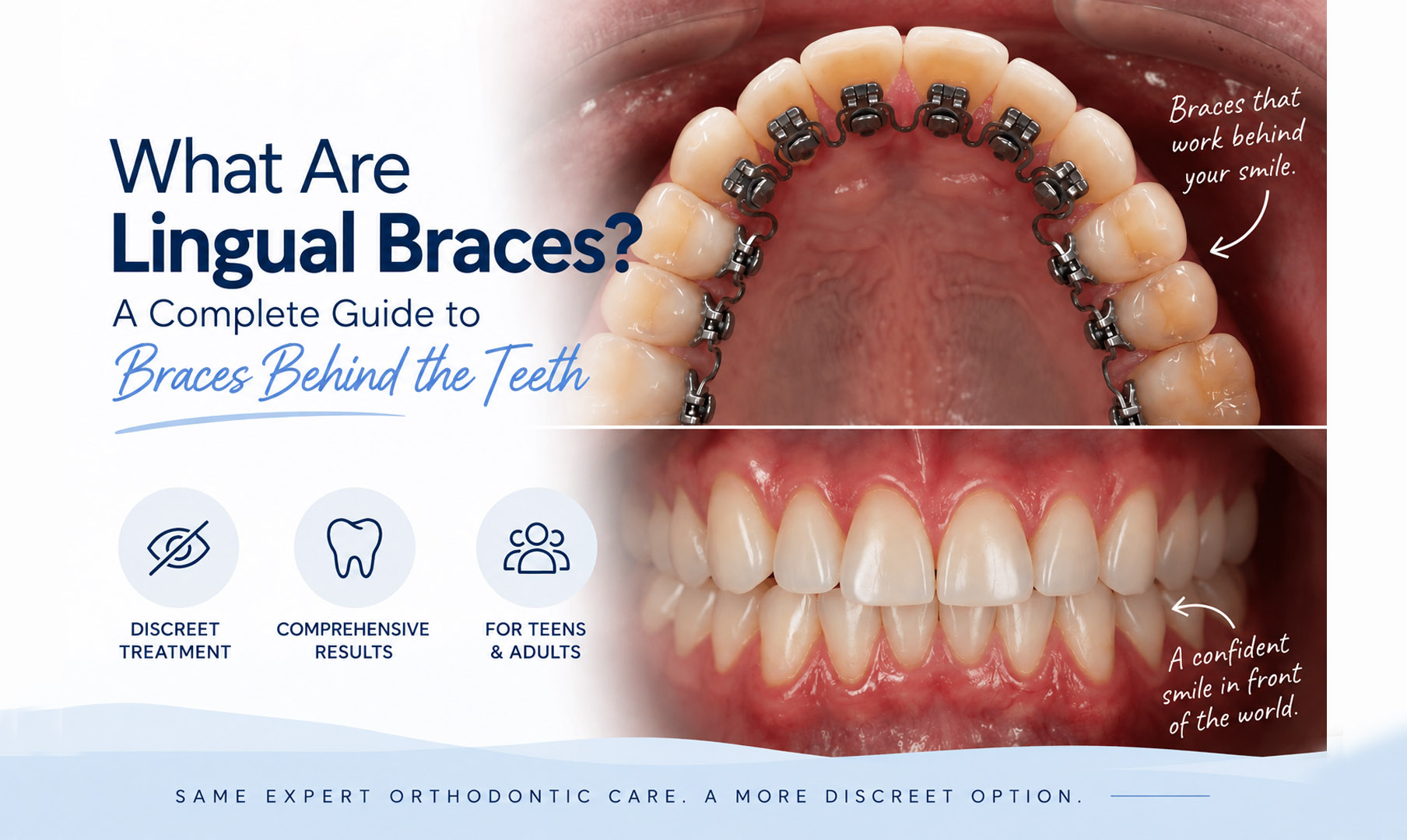
What Are Lingual Braces? A Complete Guide to Braces Behind the Teeth
If you want straighter teeth but don’t want braces showing when you smile, you may have come across an orthodontic treatment called lingual braces.
Lingual braces work similarly to traditional braces, but with one important difference: the brackets and wires are placed behind your teeth instead of on the front. This makes them one of the most discreet orthodontic treatment options available.
At BigSmile Orthodontics, we offer InSmile Braces, a modern customized lingual braces system designed to straighten teeth while keeping the orthodontic appliance hidden from view.
But what exactly are lingual braces, how do they work, and how do they compare with traditional braces and clear aligners? Here’s what you should know.
What Are Lingual Braces?
Lingual braces are fixed orthodontic braces that attach to the inside, or tongue-side, surfaces of your teeth. The term “lingual” simply refers to the side of the teeth facing the tongue.
Traditional braces place brackets and wires on the outside surfaces of the teeth, where they’re visible when you smile. Lingual braces move these components behind the teeth, allowing your orthodontist to straighten your smile without placing braces on the visible front surfaces.
Because they’re attached to your teeth, lingual braces continue working throughout the day and don’t need to be removed for eating, drinking, or brushing.
Are Lingual Braces Invisible?
Lingual braces are often referred to as hidden braces or invisible braces because of where they’re positioned.
Unlike ceramic braces, which attempt to make braces less noticeable by using tooth-colored materials, lingual braces take a different approach. The braces themselves are hidden behind your teeth.
Someone looking at your smile during a normal conversation typically won’t see the brackets and wires. For adults and teens who want discreet orthodontic treatment but don’t necessarily want removable aligners, this can be an important advantage.
How Do Lingual Braces Work?
Like other types of braces, lingual braces use brackets and wires to apply controlled forces to the teeth.
Your orthodontist creates a treatment plan based on the position of your teeth, your bite, and your desired result. The appliance then gradually guides your teeth toward their planned positions.
Modern lingual orthodontics can also incorporate digital treatment planning and customized appliances. With InSmile Braces, individual brackets and Smartwires are customized using digital technology based on each patient’s teeth and treatment plan.
What Are InSmile Braces?
InSmile Braces are a modern form of customized lingual braces. Rather than placing braces on the front of your teeth, InSmile brackets are bonded behind them. The system combines customized brackets with individually designed Smartwires to produce planned orthodontic tooth movement while keeping the appliance hidden.
Because InSmile Braces are fixed to your teeth, there’s also no need to remember to wear removable trays for a certain number of hours each day.
At BigSmile Orthodontics, our connection to this technology is particularly unique. Dr. Hongsheng Tong is the main inventor of the technology behind InSmile Braces and continues to consult as a Clinical Advisor for InSmile. Many of the earliest patients treated with the technology were treated by Dr. Tong at our Chino and Riverside offices.
Dr. Robert Lee is also a co-inventor of the technology and currently serves as Chief Medical Officer of InSmile Braces.
For patients considering lingual orthodontic treatment, this provides access to doctors who have been involved with the technology since its earliest development.
What Can Lingual Braces Treat?
Lingual braces can be used to treat many of the same orthodontic problems addressed with traditional braces or clear aligners. Depending on the individual patient, this can include crowded or rotated teeth, gaps and spacing, overbites, underbites, crossbites, open bites, and orthodontic relapse after previous treatment.
Lingual braces can be used for both relatively straightforward alignment and more comprehensive orthodontic treatment. Whether they’re appropriate for a particular case ultimately depends on the patient’s teeth, bite, treatment goals, and other clinical considerations.
What Are the Benefits of Lingual Braces?
The biggest advantage of lingual braces is simple: they’re hidden behind your teeth. There are no brackets or wires covering the front of your smile, which makes them particularly appealing to adults, working professionals, teens, and anyone who would prefer to keep their orthodontic treatment discreet.
Lingual braces are also fixed to your teeth. Once they’re bonded, they’re working continuously, without relying on you to remember to put an appliance back in after eating. There’s no aligner case to carry, no trays to lose at a restaurant, and no need to track daily wear time.
Unlike clear aligners, nothing covers the visible front surfaces of your teeth. And unlike some treatments designed primarily for minor cosmetic alignment, modern lingual braces can provide comprehensive orthodontic treatment for a wide range of tooth and bite problems.
What Are the Disadvantages of Lingual Braces?
No orthodontic treatment is ideal for every patient, and lingual braces have some tradeoffs.
Because the brackets are positioned behind the teeth, your tongue will initially be more aware of them. Some patients experience temporary tongue irritation or soreness while their mouth adjusts. Modern systems such as InSmile use smaller, smoother components designed with patient comfort in mind, but an adjustment period should still be expected.
Speech can also feel different initially because your tongue contacts the backs of your teeth when producing certain sounds. Most patients become increasingly accustomed to speaking with the appliance as their tongue adapts.
Cleaning around any fixed braces requires good oral hygiene, and lingual braces are no exception. Because the brackets are behind the teeth, patients need to pay particular attention to brushing and flossing around the appliance.
Lingual orthodontics also requires specialized knowledge and experience. Treatment planning, appliance placement, and clinical management differ from conventional braces, so fewer orthodontists routinely provide lingual treatment.
Do Lingual Braces Hurt?
It’s normal to experience some soreness after braces are first placed or following certain orthodontic appointments.
With lingual braces, there are two adjustments happening initially: your teeth are responding to orthodontic forces, and your tongue is getting accustomed to the appliance behind your teeth.
The first several days are typically when patients notice the braces most. As your mouth adapts, the appliance generally becomes a much more normal part of everyday life.
Can You Eat Normally with Lingual Braces?
You can eat a wide variety of foods with lingual braces, although you’ll need to be careful with foods that could damage your brackets.
Very hard, sticky, or crunchy foods can place excessive force on orthodontic appliances. Harder foods can often be cut into smaller pieces rather than bitten into directly.
Unlike clear aligners, however, you don’t have to remove your appliance every time you eat or drink. The braces remain attached behind your teeth.
Lingual Braces vs. Traditional Braces
Lingual braces and traditional braces share the same fundamental concept: both use fixed brackets and wires to gradually move teeth. The primary difference is where the appliance is placed.
Traditional braces attach to the front surfaces of the teeth and are visible when you smile. Lingual braces attach to the back surfaces, keeping the appliance largely hidden from view.
Both remain attached throughout treatment, so neither depends on remembering to wear a removable appliance. The initial adjustment is somewhat different, however. With traditional braces, the lips and cheeks adapt to the brackets, while with lingual braces, the tongue adapts to the appliance behind the teeth.
For many patients, the decision comes down to whether keeping their braces hidden is an important treatment priority.
Lingual Braces vs. Clear Aligners
Lingual braces and clear aligners both offer discreet alternatives to traditional braces, but they accomplish this in very different ways.
Clear aligners, such as Invisalign®, use a series of removable transparent trays placed over the teeth. Patients can remove the trays for eating, brushing, and flossing, but successful treatment depends on consistently wearing the aligners as directed.
Lingual braces use fixed brackets and wires hidden behind the teeth. Because the appliance stays attached, there is no need to keep track of daily wear time or remove anything before meals.
Another difference is appearance. Clear aligners are designed to be difficult to notice, but the trays still cover the visible surfaces of the teeth and treatment may require tooth-colored attachments. With lingual braces, the orthodontic appliance itself is positioned behind the teeth.
Neither treatment is universally better. The right choice depends on your orthodontic needs, lifestyle, priorities, and personal preferences.
For a more detailed comparison, read our guide to Lingual Braces vs. Invisalign: Which Is Better for Invisible Orthodontic Treatment?
Are Lingual Braces Good for Adults?
Adults are one of the groups most likely to appreciate lingual braces.
Many adults want orthodontic treatment but hesitate because they don’t want conventional braces visible during work, meetings, social events, photographs, or other aspects of daily life. Because lingual braces sit behind the teeth, they allow adults to undergo fixed orthodontic treatment while maintaining a natural-looking smile throughout the process.
They’re also an option for adults who like the discretion of clear aligners but would prefer a fixed treatment that doesn’t depend on remembering to wear and replace removable trays.
Are Lingual Braces an Option for Teenagers?
Lingual braces can also be an option for teenagers.
Some teens want braces but don’t want brackets visible on the front of their teeth. Others may prefer a fixed appliance rather than being responsible for wearing removable aligners consistently.
In those situations, lingual braces can offer an appealing combination: a fixed appliance that stays hidden. An orthodontist can determine whether InSmile, clear aligners, traditional braces, or another treatment option makes the most sense for an individual teenager.
How Long Does Treatment with Lingual Braces Take?
There isn’t one treatment time that applies to every patient. Treatment length depends on how much the teeth need to move, the complexity of the bite, the patient’s treatment goals, biological response to orthodontic movement, and whether instructions such as elastic wear are followed.
After examining your teeth and bite, your orthodontist can provide a more individualized estimate of treatment time.
How Much Do Lingual Braces Cost?
The cost of lingual braces varies depending on the complexity and length of treatment, the appliance being used, and the orthodontic practice providing treatment.
Because lingual orthodontics involves specialized appliances, customization, and clinical expertise, fees may differ from those for conventional braces or clear aligners.
A consultation is the best way to determine which treatment is appropriate and the actual cost for your individual case.
Why Choose BigSmile Orthodontics for Lingual Braces?
Lingual orthodontics is one area where BigSmile Orthodontics has an unusual history.
Dr. Hongsheng Tong is the main inventor of the technology behind today’s InSmile Braces. He co-founded InBrace, the original company that developed the technology, and has held multiple clinical and technical leadership positions throughout its development.
Many of the earliest patients ever treated with the technology received their treatment from Dr. Tong at BigSmile’s Chino and Riverside offices, which is why the practice is sometimes referred to as the “Birthplace of InSmile Braces.”
Today, Dr. Tong continues to consult as a Clinical Advisor for InSmile and teaches as a Clinical Assistant Professor at USC.
BigSmile is also home to Dr. Robert Lee, a co-inventor of the technology and the current Chief Medical Officer of InSmile Braces.
Together, that gives patients in Chino and Riverside access to doctors who didn’t simply learn how to use the technology. They helped develop it.
Discover Hidden Braces in Chino & Riverside
If you’ve been interested in straightening your teeth but don’t want visible braces on the front of your smile, lingual braces may be worth considering.
At BigSmile Orthodontics, we offer InSmile Braces, a customized lingual orthodontic system designed to provide fixed orthodontic treatment while keeping your braces hidden behind your teeth.
Schedule a complimentary consultation at our Chino or Riverside office to learn whether InSmile lingual braces, clear aligners, traditional braces, or another orthodontic treatment option is right for you.